
The Competition Commission of India (CCI) has approved the acquisition of a stake in AI acceleration cloud provider Neysa Networks by Blackstone-backed private equity funds and other investors, following Neysa's announcement of a USD 1.2 billion capital raise.

The upcoming Tata Sons board meeting in June could possibly throw some light on several critical issues that may have a bearing on the future of the corporate behemoth.

Pakistan's skewed foreign reserves got a major boost after Saudi Arabia pledged an additional $3 billion in deposits while extending its existing $5 billion facility for a further three years.
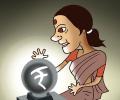
Credit card transactions in India have surged over 2.6 times between 2021 and 2025, driven by private sector banks, while debit card usage declines due to growing adoption of UPI and digital wallets, according to an RBI report.

Ahead of the Reserve Bank of India's (RBI's) monetary policy review in the first week of December, major public sector non-banking financial companies (NBFCs) - the National Bank for Agriculture and Rural Development (Nabard), Small Industries Development Bank of India (Sidbi), Power Finance Corporation (PFC), and Indian Railway Finance Corporation (IRFC) - plan to raise up to Rs 24,000 crore together through bond issuancesk.

Yield-generating instruments like Infrastructure Investment Trusts (Invits), Real Estate Investment Trusts (Reits), and Non-Convertible Debentures (NCDs) are witnessing a surge in investor interest, contrasting with a notable slowdown in the equity primary market, which saw only one IPO in April.

Credit card transactions in India have surged over 2.6 times between 2021 and 2025, reaching 570 crore volumes and Rs 23.2 lakh crore in value, with private sector banks significantly increasing their market share, according to a recent RBI report.

The Powerica Limited IPO opened on March 24, 2026, with muted Day 1 subscription. Check latest GMP, price band, lot size, issue details, and investor response.

Ashok Lahiri, a distinguished economist with experience in government, the private sector, and electoral politics, has been appointed as the new Vice-Chairman of NITI Aayog, tasked with strengthening India's reform trajectory and policy-making.

The finance ministry is working on a Cabinet note for establishing a full-fledged Public Debt Management Office, officials told Business Standard.

If one has to compare the tenures of the two prime ministers one must credit Nehru with laying the foundations on which Modi is building a grand edifice, asserts Colonel Anil A Athale (retd).

The Securities and Exchange Board of India (Sebi) has significantly reduced the number of draft offer documents returned or rejected, dropping from 17 in FY25 to just two in FY26, thanks to a more facilitative and engagement-first regulatory approach.

A few frantic calls later, the answer emerged: She had missed her connecting flight in London. Not because she was late. Not because she couldn't walk fast enough. She had simply gone to the wrong gate, sat down, and waited.

The National Company Law Tribunal (NCLT) has ordered the initiation of insolvency proceedings against Vishwajeet Jhawar, promoter of Marvel Group, following a petition by APRN Enterprises for outstanding debt.

An Indian-origin couple in the UK has been sentenced for breaching a disqualification order, operating companies despite a ban imposed after tax fraud claims.

'We believe the truth is in the middle, and that India is at an important crossroads.'

The RBI advisory follows a labour ministry request earlier this year seeking the central bank's expertise to identify gaps in EPFO's investment strategy and fund management practices, including accounting, risk management, and internal governance.

Earlier, such entities were only permitted to invest their rupee surplus balance in accounts in central government securities, including treasury bills. "It has now been decided to also permit investment of these balances in non-convertible debentures/bonds and commercial papers issued by an Indian company," the RBI said.

India has managed high government debt-to-GDP, a slowing domestic revenue engine, lower household savings and a more hostile geopolitical environment separately in the past. But together, they threaten to undo the growth narrative on which today's optimism rests, warns Debashis Basu.

Sensitive issues remain. Water sharing of the Ganga and Teesta rivers. Treatment of minorities, particularly Hindus. Border management. Trade imbalances. Connectivity projects.What happens next will shape not just bilateral ties, but the balance of South Asia itself, points out Ramesh Menon.

In the rush to complete tax-saving investments at the end of the financial year, many taxpayers choose instruments that do not match their long-term financial goals.

Kerala's 2026 assembly election will see a three-cornered contest where religion and communalism have emerged as central themes for the first time, challenging the state's long-celebrated secular fabric.

AIADMK general secretary Edappadi K Palaniswami has announced a series of welfare measures, including free refrigerators for rice ration cardholders, if the party wins the 2026 Assembly election in Tamil Nadu.

The Securities and Exchange Board of India (Sebi) on Wednesday overhauled the cost framework for the 80 trillion domestic mutual fund (MF) industry, introducing a simplified structure aimed at improving transparency for investors while balancing the impact on asset managers.

After the last Budget's announcement of a major tax relief for those earning an annual salary of less than Rs 12 lakh, there is not much that individuals can look forward to in the forthcoming Budget, points out A K Bhattacharya.

In the Indo-Pacific's new era -- where perception shapes reality faster than treaties -- the real entrapment is not of China or the United States. It is the test Japan has set for itself -- and whether partners like India, acting as balancers rather than accelerants, can help ensure that the story ends in stability, points out Varun Arya.

The LPG squeeze on India's restaurant sector is the quotidian face of a deeper crisis.

The delegations from the US and Iran head to Islamabad on Friday, carrying a ceasefire that is already fraying, a Strait that is technically open and practically closed, and a negotiating agenda that would challenge even parties actually negotiating in good faith, which these groups are not. Prem Panicker continues his must read blog on the Iran War.

The key question is how much of the latest growth record represents recovery from the 2020-2021 downturn, and what is the sustainable growth rate now, asks T N Ninan.

Capex, infrastructure development, and prudent fiscal management are the key focus areas in the Budget, says Nilesh Shah.
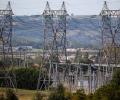
The government on Wednesday put out the draft of a new policy that projects the country's power sector will need Rs 50 trillion in investments by 2032 and Rs 200 trillion by 2047, proposing ambitious reforms in generation, transmission and distribution.

'People become guided by emotions, fear of missing out, and greed. They tend to invest in booming sectors that may prove exceptionally expensive.' 'Typically, that represents the peak, and subsequently, they lose substantially.'

The Union Budget for 2026-27, presented by Finance Minister (FM) Nirmala Sitharaman on Sunday, which was a first, had an excellent domestic macro backdrop. According to the first advance estimates, gross domestic product (GDP) in constant prices is projected to grow 7.4 per cent in the current financial year, against 6.5 per cent in 2024-25.

Securities and Exchange Board of India (Sebi) Chairman Tuhin Kanta Pandey on Thursday called for sharper disclosures in IPO (initial public offering) offer documents, particularly around risk factors, valuation rationale, objects of the issue, and utilisation of proceeds.

The Indian government has expressed its disagreement with the IMF staff's 'baseline' assumption that the 50 per cent US tariffs on its goods exports 'would remain in place indefinitely', based on which the staff pegged the country's GDP growth at 6.6 per cent this year, and pared its 2026-27 projection by 20 basis points to 6.2 per cent.

Following the notification allowing 100 per cent foreign direct investment (FDI) in the insurance sector, the Finance Ministry has revised norms to remove the requirement that a majority of directors and key management personnel in an insurance company with foreign investment be Indian residents.

There have been more instances of a management team buying out the owners of a company after the pandemic. There are eight such transactions, called management buyouts (MBOs), in the five years ending 2024, according to data from tracker LSEG shared with Business Standard.

Tough times don't last, but tough people -- and smart financial strategies - do, says Ramalingam Kalirajan

The idea of back-loading the target of fiscal consolidation is perhaps guided by the government's desire to be prepared for any adverse developments in the coming year, points out A K Bhattacharya.

This exercise allows investors to realign their portfolios with changing market conditions and evolving personal objectives.
